Best loyalty tools and solutions in 2025
Download the report

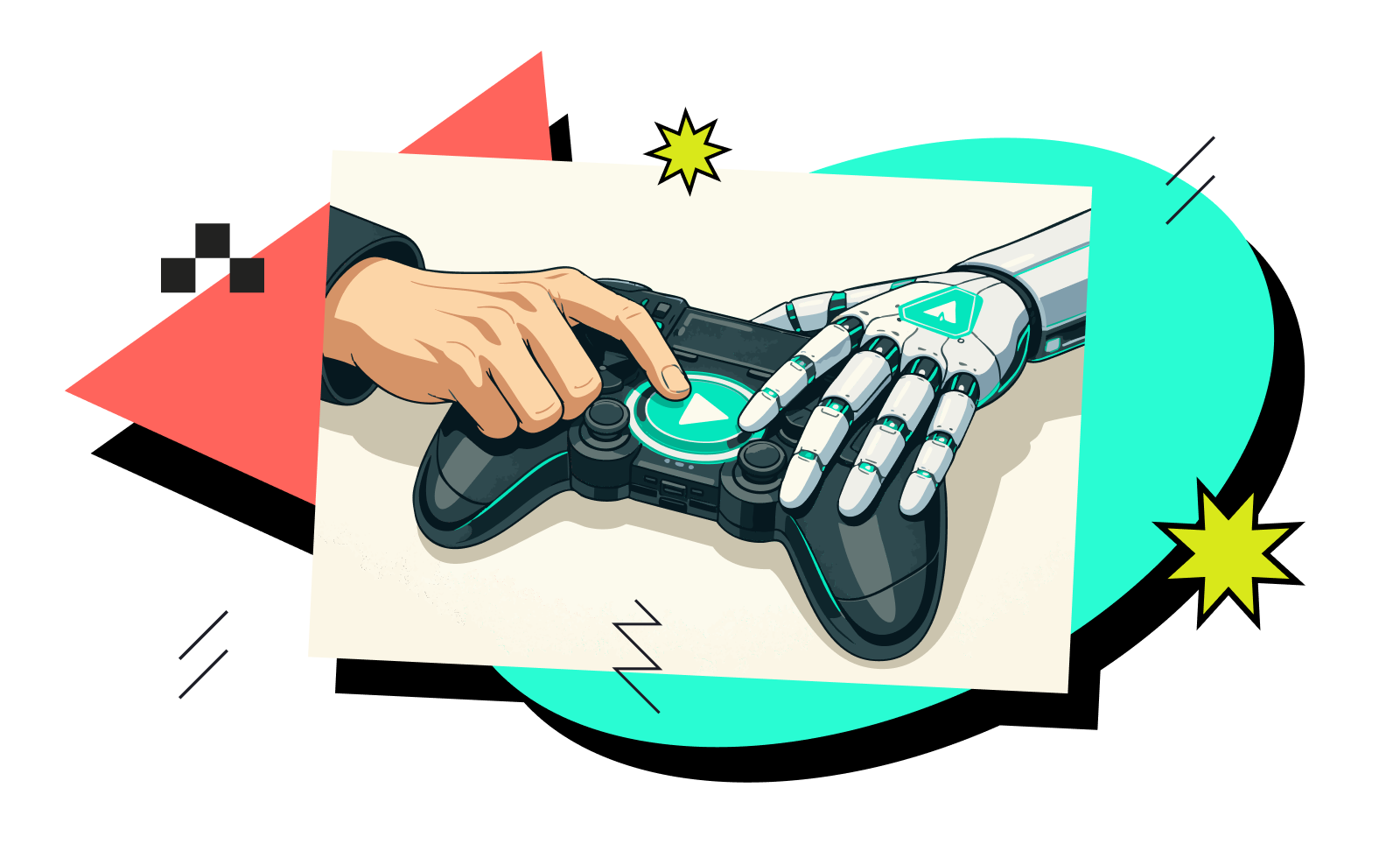

Media outlets, experts, and influencers often express concerns that the AI bubble may soon burst. We understand and take this skepticism to heart. That’s why, in this article, we explore solid, real-world applications of AI in video streaming. We will explore developments from leading streaming platforms and software providers to help you get fresh ideas for improving your operations. So, feel free to get yourself a “damn fine cup of coffee” like one of Twin Peaks’ main characters and prepare to absorb the knowledge about how AI can help you to:
Let’s go!
Machine learning (ML) models do their magic to enhance streaming video quality and ensure uninterrupted video playback when used for tasks such as video super resolution (VSR) and adaptive bitrate streaming.
Video super resolution involves generating high-resolution video from a lower-resolution source. High-resolution video contains a large number of pixels, which affects the amount of detail in it. Think of shots taken with an iPhone 7 and an iPhone 17 as examples.
The machine learning approach to VSR entails algorithms ‘guessing’ or forecasting intricate details in a video and adding them. To make highly accurate predictions, data scientists train a model on a multitude of images at different resolutions. The result is a sharper and more realistic video.
This technique is suitable for both remastering uploaded videos and improving the quality of livestreams. The ATHENA research lab at Bitmovin, a multimedia technology company, proposed a method for delivering high-quality streaming video while using 35% less bitrate. Called DeepStream, it entails using a video enhancement layer powered by deep neural networks (DNNs). Users whose devices have advanced graphics chips, or GPUs, would get quality-upscaled video. Meanwhile, viewers with older or less powerful devices would receive a regular version. The researchers also experimented with adapting this approach for mobile devices. Their solution is to leverage special lightweight DNNs that require less processing power and battery use from smartphones to perform the task.
Increasing video streaming quality demands significant computational power. And if a company’s infrastructure can’t handle such a workload, videos may be delivered with delays. For this reason, streaming and entertainment businesses mostly use VSR for uploaded content. In late October 2025, YouTube introduced an AI feature that automatically upscales videos to higher resolutions. “We’re starting with videos uploaded below 1080p, upscaling them from SD to HD, with the goal to support resolutions up to 4K in the near future.” Creators can opt out of these enhancements.

Solution providers: Pixop, Bitmovin, BLUEDOT, Topaz Labs
Operators who offer gaming streams on their platforms can integrate one of these tools into their VOD content.
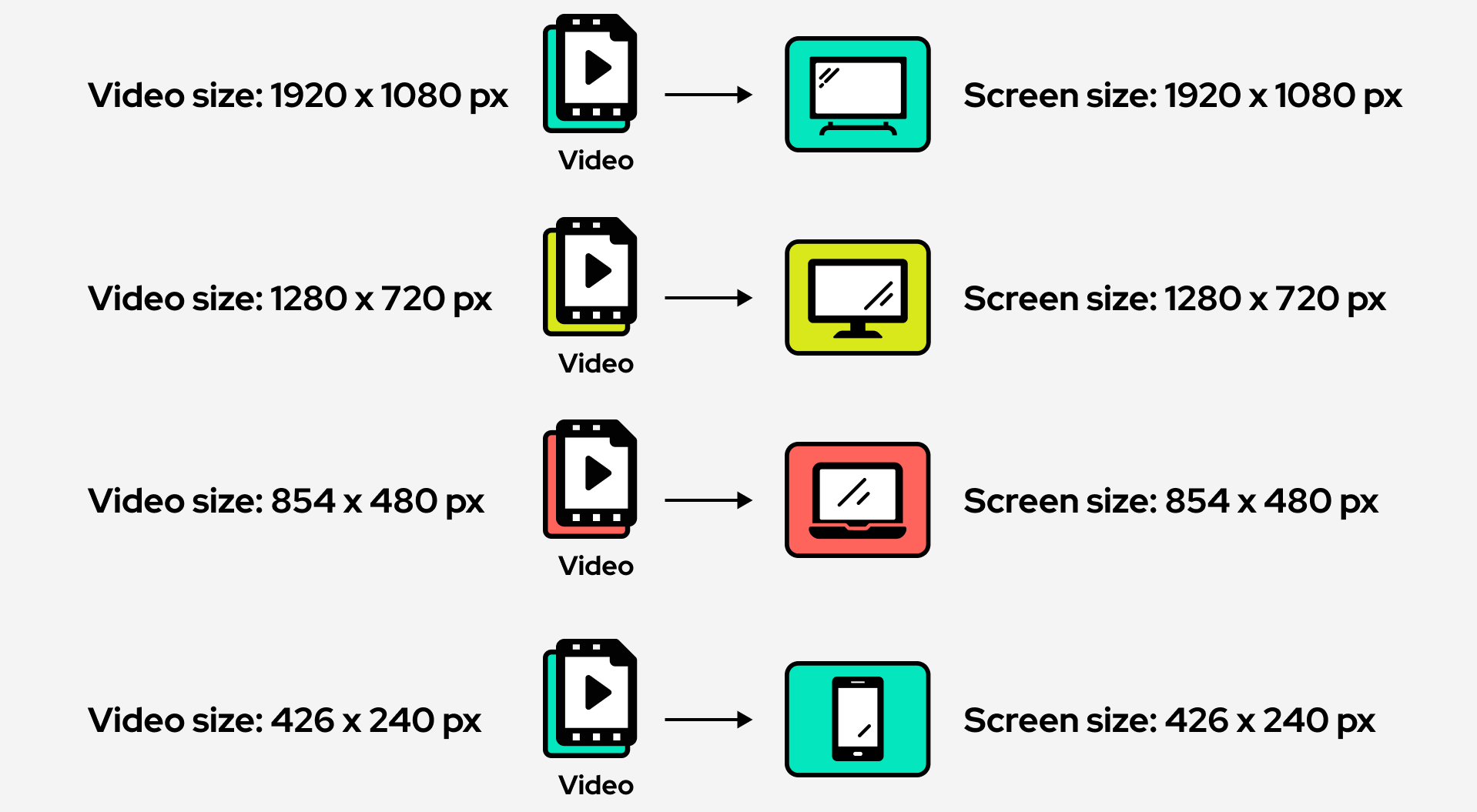
Adaptive bitrate (ABR) streaming is, perhaps, a more democratic technique than AI-based video super resolution. It prevents video buffering when a user’s internet connection slows down. Speaking in the tech language, this technique ensures a smooth viewer experience by maximizing streaming stability and maintaining low latency, the delay between an event happening and the viewer seeing it. Low latency is critical for esports and casino streaming, as delays of even a second can ruin competitive integrity, game fairness, and immersion.
Adaptive bitrate streaming includes these actions:
1. Encoding the video in multiple quality versions, ranging from 480p to 4K.
2. Segmenting the video into small chunks, typically a few seconds long.
3. Using a client player that monitors bandwidth and internet speed to switch between optimal quality versions.
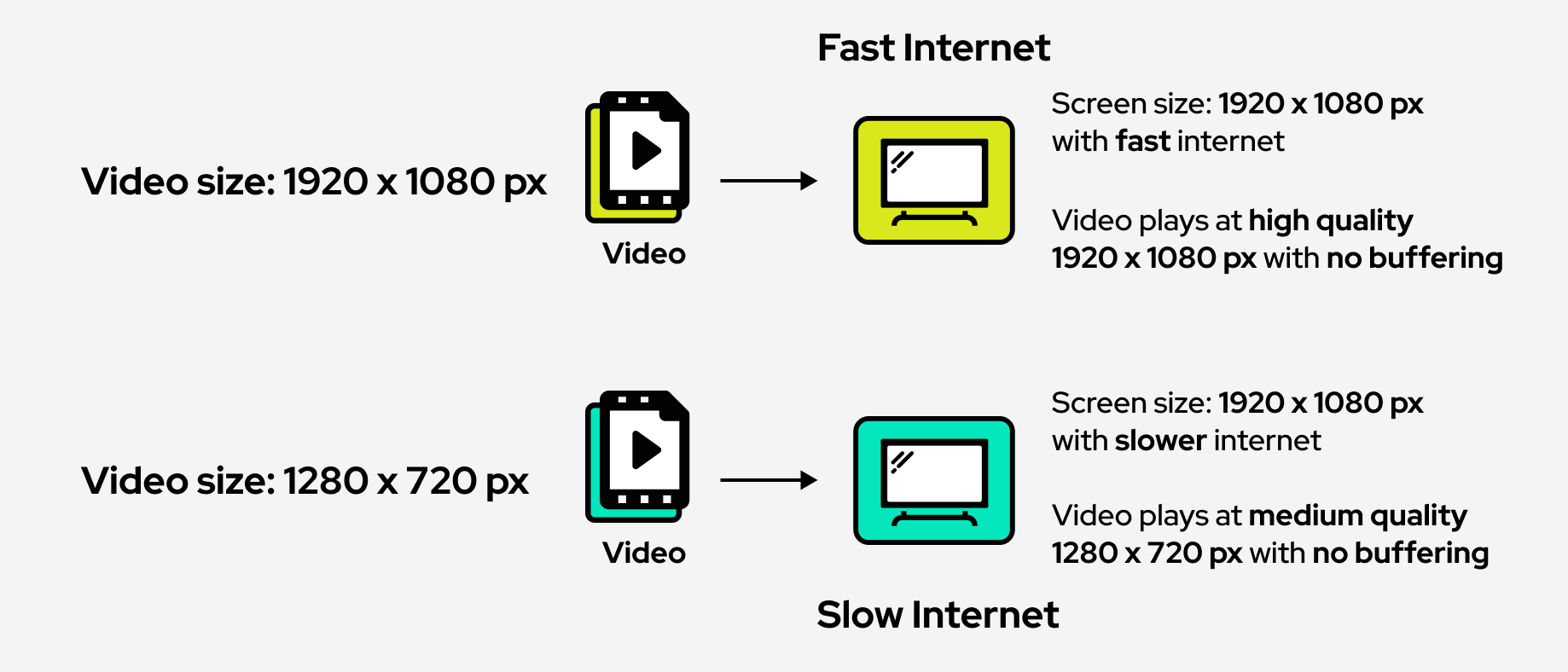
The ML-based approach to adaptive streaming is about using a predictive model instead of fixed rules to make switching decisions (e.g., if the buffer is below 5 seconds, drop the quality). The model analyzes numerous factors, such as historical network performance, re-buffering events, time-of-day traffic, and device type, to forecast what a user’s available bandwidth will be in a couple of seconds. Based on this prediction, the streaming software (running on the client device) can proactively request the best-fitting video quality version for the next segment.
For livestreams, multiple quality versions are created in real time.
Twitch introduced AI adaptive bitrate streaming in January 2024. Developed in collaboration with NVIDIA and OBS, the Enhanced Broadcasting feature allows streamers to simultaneously broadcast up to three video resolutions at up to 1080p. There’s the hardware requirement, of course: creators must have GeForce RTX or GTX graphics processing units installed on their PCs. Later, the purple platform added the opportunity to stream at up to 4K for up to five concurrent streams.
The feature uses an AI server-side algorithm that enables it to choose the best stream configuration for OBS Studio automatically. The algorithm analyzes the streamer’s hardware and network conditions.
Before the release, only top channels could offer multiple quality versions of the same stream.
Consider implementing an ML-based adaptive bitrate in your IT infrastructure to enable your streamers to deliver the highest viewing and smooth betting experiences if you use CopyStake or a similar tool for participatory casino streams.
AI rewrites the rulebook for live content creation as well. Streamers have numerous tools for applying complex visual effects that were once available only in professional studios.
AI virtual green screens are powered by deep learning models, typically Convolutional Neural Networks (CNNs). Unlike traditional Chroma Key filters that rely on rigid mathematical thresholds to detect and remove a specific color code, DL models analyze image semantics to distinguish a human subject from the background. As a result, streamers can get a video with clear edges without buying a physical green screen or setting up complex lighting to avoid ’holes’ in the background.
This effect is available in NVIDIA Broadcast (as a Virtual Background feature — Background Removal, Replacement, and Blur).
Uneven lighting, a lack of emphasis on one’s face, or harsh shadows are visual flaws that can turn viewers off, even if a charismatic casino streamer is behind the screen. Luckily, AI is here to help hosts deliver that perfect picture — one of the factors of user engagement.
AI virtual lighting is the technology behind the solution. A deep learning model first analyzes the live video feed to map the speaker’s facial geometry in 3D, while simultaneously estimating the locations and intensities of existing light sources. It then algorithmically generates a virtual key light, manipulating pixels in real time to simulate new shadows and highlights on the face.
Tools: NVIDIA Broadcast
Another valuable invention for streamers or anyone who frequently hosts video calls is AI gaze redirection. The technology solves the fundamental problem of the modern webcam setup: the camera lens and the screen you look at are never in the same place, making it difficult to maintain eye contact with the audience.
The core techniques behind this ‘wonder’ are eye gaze estimation and pixel manipulation. Here’s how tools approach the task:
NVIDIA Broadcast, with its Eye Contact feature, is one of the tools providing AI gaze correction.
However, I found more solutions that offer eye contact correction for pre-recorded videos, for instance, VEED, Kapwing, Descript, and BIGVU.
AI technologies found their place in gaming environments where digital and physical worlds coexist — live casinos. The goal is to keep sessions immersive while making it easier for clients to follow game details.
Specialists from Vindral developed V-track roulette — a tracker and visualizer that allows overlaying custom visuals, namely multipliers, right on the roulette wheel. Thanks to that, players don’t need to split their attention between the dealer, the table with a wheel, and the digital interface during a casino stream. The tracker uses computer vision to monitor the wheel’s speed, rotation, and position in real time. And the visualizer renders data from the tracker on it.
Isn’t it wonderful when somebody else does the job for us? Streaming solutions now free iGaming streamers and other content creators from the tedious work of choosing catchy fragments from broadcast recordings, trimming, and stitching them into a viral-ready video. Users can also post highlights across social media in one click.
Deep learning models, the workhorse of such solutions, identify key broadcast moments like sudden high-action sequences, rapid changes in audio levels (cheering/shouting), or on-screen text events (kill notifications or wins), and instantly clip them into short videos.

Twitch, which already provides a similar tool, Clips, also rides this trend. In October 2025, the platform introduced its AI-powered Auto Clips. The tool is currently in alpha testing.
Solution providers: Restream, VEED
The use cases of AI in video streaming we discussed above involve using technologies to augment the user experience, streamline production, and enhance video quality. But what if I tell you that the whole stream can be generated? AI streamers demonstrate once more that sci-fi movie inventions are part of our realm.
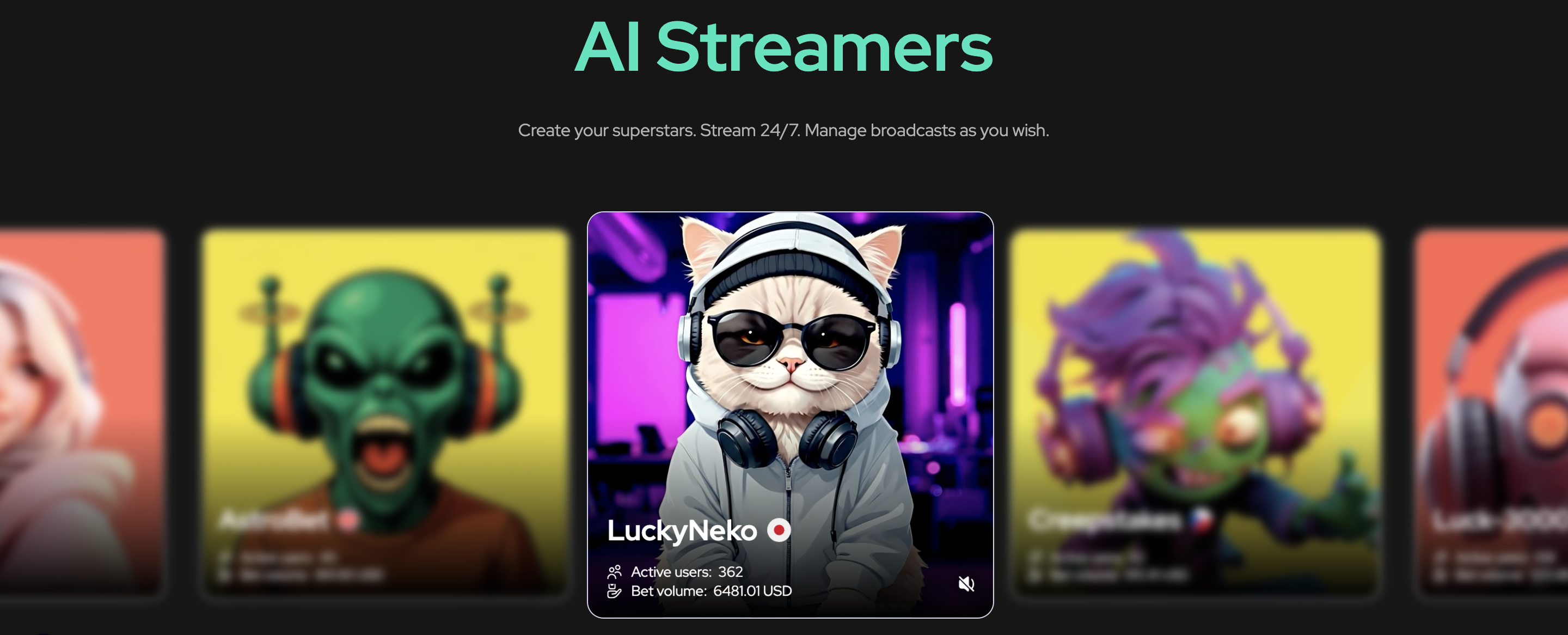
An AI streamer is a virtual character that hosts livestreams, playing video and casino games, chatting with viewers, singing, playing musical instruments, or promoting products. What virtual streamers do depends on the target audience’s interests and the businesses they’re tirelessly working for.
They rely on various AI technologies to act like humans. For example, streamers use text-to-speech synthesis (via DL models) to turn processed text into spoken words. Their singing is powered by generative AI: virtual personas have built-on voice generators to sing in various styles and genres. Computer vision is the ‘what’ behind their body movements and facial expressions, and machine learning is behind quick, context-aware responses to chat messages. So, their lively presence in a broadcast owes it to a bouquet of cutting-edge technologies.
Virtual streamers can take the forms of:
AI streamers have a strong commercial future, particularly in iGaming, gaming, and e-commerce industries, thanks to their cost efficiency, the ability to drive and scale sales, and the audience’s appetite for tech innovations.
The potential of AI in transforming streaming operations is impressive. More importantly, the tech is ready-to-use. You can sharpen livestreams and give new life to VODs with video super resolution, stop those annoying lags with ML adaptive bitrate, upgrade studio setups, or launch deal-breaking AI streams for your players.
Here’s the real talk: most of the tasks we described can be performed the old-fashioned way, without AI. So, it’s better to assess whether an investment is worth it before diving into a significant overhaul.
At the same time, AI offers automation, precision, and a scale that human teams can’t match. When implemented wisely, AI can elevate your operations and even allow you to create new revenue streams. Defining where the technologies can give your iGaming brand the most competitive advantage is key.